Debunking the Top 5 Bratislava Myths
For decades, many international travelers viewed Bratislava through a narrow lens—often colored by outdated Hollywood tropes or a quick glance from a bus window en route between Vienna and Budapest. It was frequently dismissed as a mere pitstop, a grey transit point in the heart of Central Europe that didn’t warrant a suitcase unpacking.
However, those who actually step off the beaten path discover a city that is currently undergoing one of the most exciting urban renaissances in Europe. In this post, we are going to debunk the five most persistent Bratislava myths and reveal why this “hidden gem” is finally ready for its close-up. From coronation history to thriving vineyards, let’s separate fiction from the vibrant Slovak reality.
Myth 1: It’s a “Grey Soviet” City
The Truth: Our unique buildings built during communist-era blend with vast historical heritage and world-class modern architecture.
The most common of all Bratislava myths is the idea that the city is a monolithic block of concrete. While the iconic UFO Bridge (Most SNP) and the creative architecture of the Slovak Radio building offer a fascinating glimpse into 20th-century functionalism, they represent only one layer of a complex urban tapestry.
Bratislava’s skyline is a conversation between eras. You can stand in the Primatial Square surrounded by Pale Pink Neoclassical palaces, walk five minutes into the medieval Old Town, and then look up to see the “Sky Park” district—a forest of fluid, organic skyscrapers designed by the world-renowned Zaha Hadid Architects. This mix of Gothic spires, Baroque facades, and cutting-edge sustainability projects creates a visual energy you won’t find in more “uniform” European capitals.
Sensory Experience: Stand on the observation deck of the UFO tower at sunset. Watch the light glint off the Danube river, illuminating the white walls of the Castle on one side and the glowing glass towers of the new downtown on the other, while the smell of roasted coffee wafts up from the boutique cafes in the streets below.
Myth 2: There is no deep history here
The Truth: We are a city of two castles with a rich legacy as a coronation capital, where the history of empires was written for centuries.
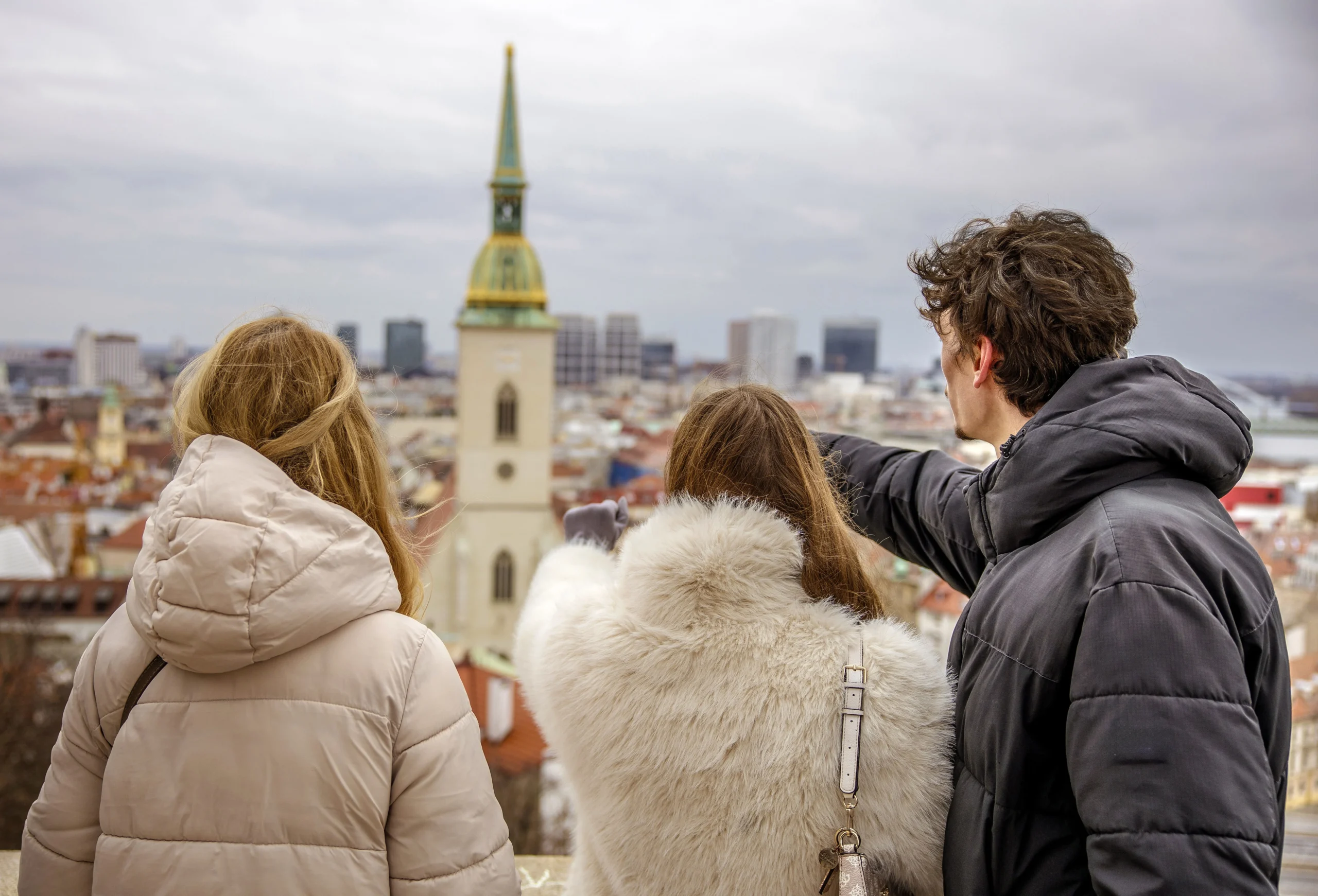
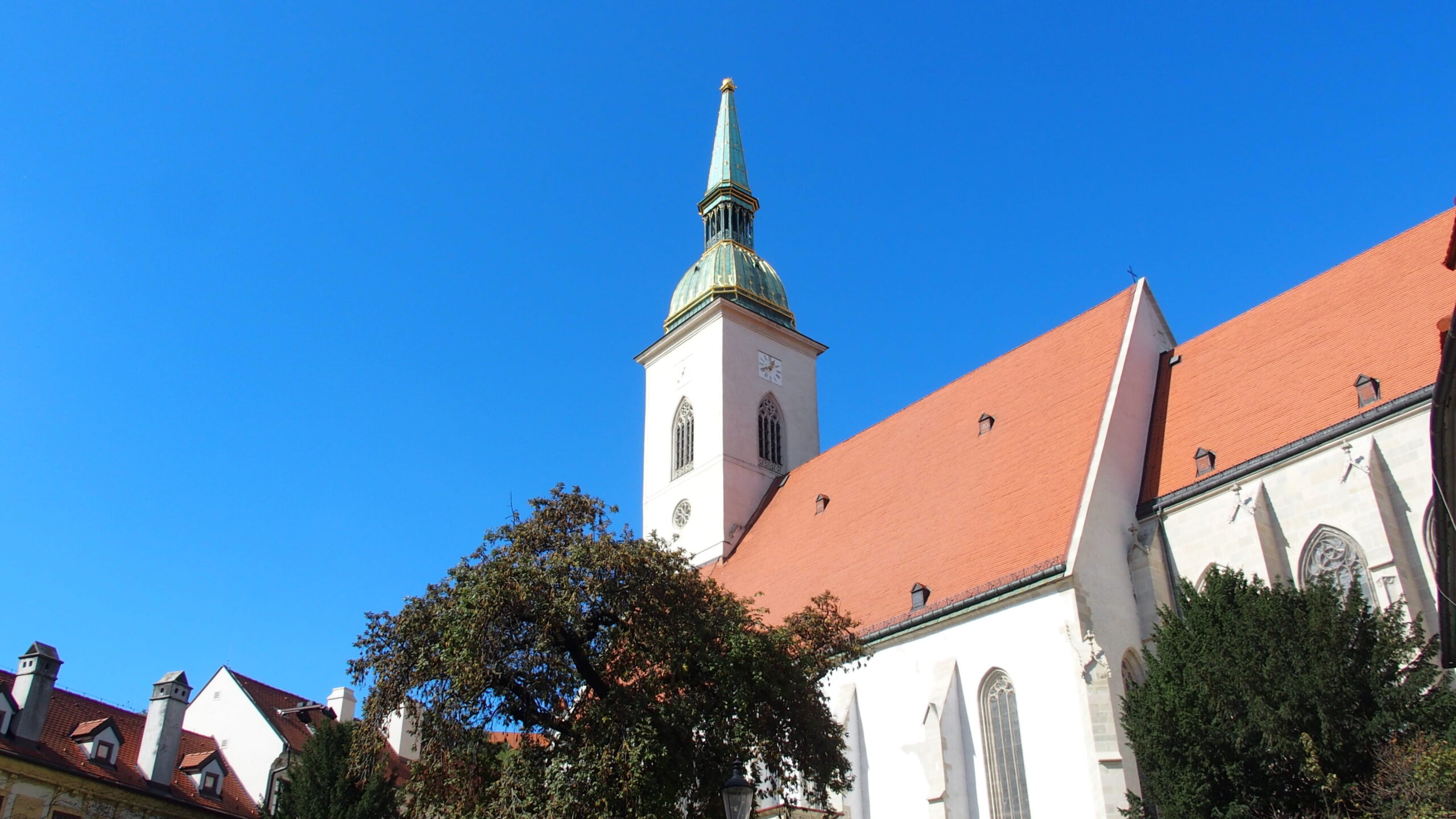
Some travelers mistakenly believe Bratislava is a “new” city. In reality, for nearly 300 years, this was the coronation city for the Kingdom of Hungary. Between 1563 and 1830, no fewer than 11 kings and 8 queens—including the formidable Maria Theresa—had the Crown of St. Stephen placed on their heads within the walls of St. Martin’s Cathedral.
Beyond the main Bratislava Castle that watches over the Danube, the city guards a second, more rugged history at Devín Castle. Perched on a high cliff at the confluence of the Danube and Morava rivers, Devín has been a strategic site since the Roman Empire and the days of the Great Moravian Empire. These aren’t just ruins; they are the literal foundations of Central European identity.
Myth 3: Bratislava is just castle and bridge
The Truth: The city boasts dozens of unique districts, from Old Town to rolling vineyards right within the city limits.
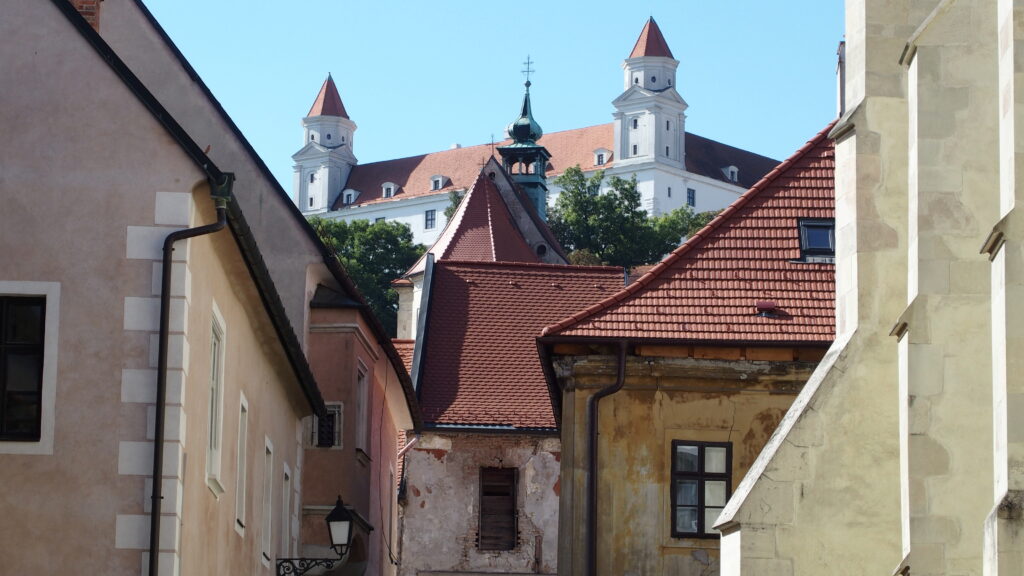
While the “inverted table” look of the Castle and the futuristic Bridge are iconic, they are just the prologue. Bratislava is a city of distinct neighborhoods, each offering a different soul. To see the “real” city, you have to venture beyond the 500-meter radius of the Main Square (even thought is beautiful)
Just a short tram ride from the center lies the Rača district, where the city streets give way to rolling hills of green. Bratislava is one of the few capitals in the world with active vineyards located directly within its city limits. You can hike through the woods of the Small Carpathians in the morning and be sipping a glass of local Frankovka Modrá (Blaufränkisch) at a vintner’s cellar by the afternoon.
Myth 4: We’re just a Vienna suburb
The Truth: We are a sovereign city with a unique identity, where 1,000 years of history meet a modern lifestyle.
Because Vienna is only 60 kilometers away, people often assume Bratislava is an extension of its Austrian neighbor. This is a missed opportunity to see a completely different culture. While Vienna is grand and imperial, Bratislava is intimate, edgy, and accessible. It possesses a “human scale” that makes it feel like a living room rather than a museum.
Slovak identity is rooted in a unique Slavic heritage, a distinct language, and a culinary tradition that favors hearty, comforting flavors. The “modern lifestyle” here isn’t about copying Western trends; it’s about a thriving craft beer scene, innovative tech startups, and a passionate local arts community that utilizes old industrial spaces for galleries and markets. Bratislava doesn’t compete with Vienna—it offers a complementary, more relaxed alternative.
Local Vibe: Spend an hour at the Stará Tržnica (Old Market Hall) on a Saturday. You’ll see young families, local artists, and elderly residents all gathering for fresh produce, sourdough bread, and community projects.
Myth 5: Bratislava is a 2-hour city
The Truth: If you don’t stay for at least 3 days, you’ll only scratch the surface and miss most of the city’s real soul, stories, and local life.
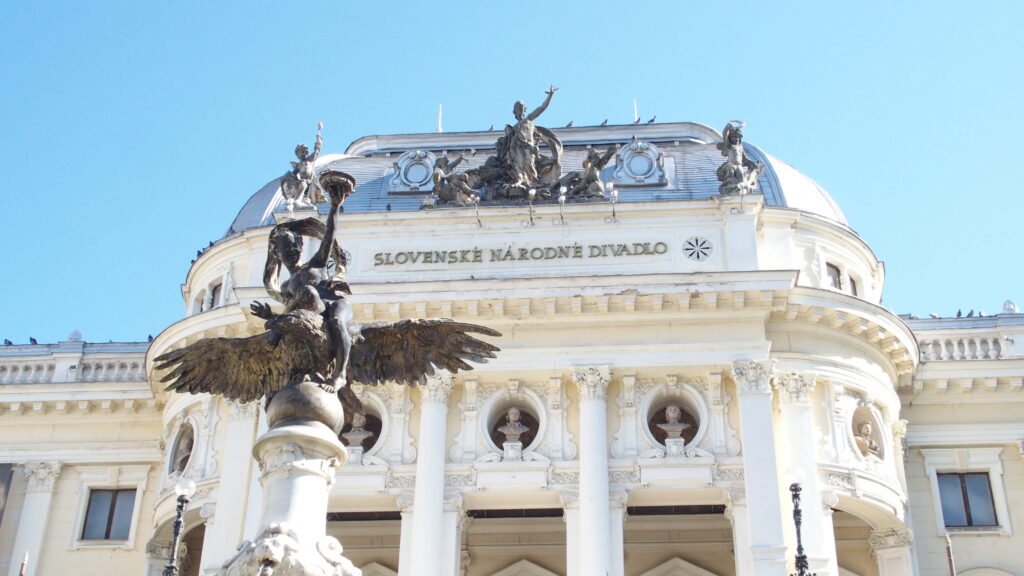
This is perhaps the most damaging of the Bratislava myths. The “day-tripper” mistake involves seeing the Main Square, taking a photo of the “Man at Work” statue, and leaving. To do this is to miss the layers that make the city special.
Day 1 is all about the historical heart of the city and the iconic Bratislava Castle, where you can soak in the atmosphere of the Old Town. On Day 2, explore the unique “Blue Church,” take a stroll along the Danube riverside promenade at Eurovea, and visit the Nedbalka Gallery—often called the “Slovak Guggenheim.” You can also take a trip outside of the city, to the towns of Modra and Svätý Jur or Red Stone Castle
For Day 3, head out to the majestic Devín Castle, standing at the confluence of the Danube and Morava rivers. From there, it’s just a short walk to Sandberg, a fascinating sandstone hill with stunning views and remnants of a prehistoric sea. When you stay longer, you stop being a tourist and start feeling like a guest. Take the time for a local wine cellar tour in the Small Carpathians, an authentic food tour, or a “Bratislava Behind the Iron Curtain” tour for a truly different perspective.
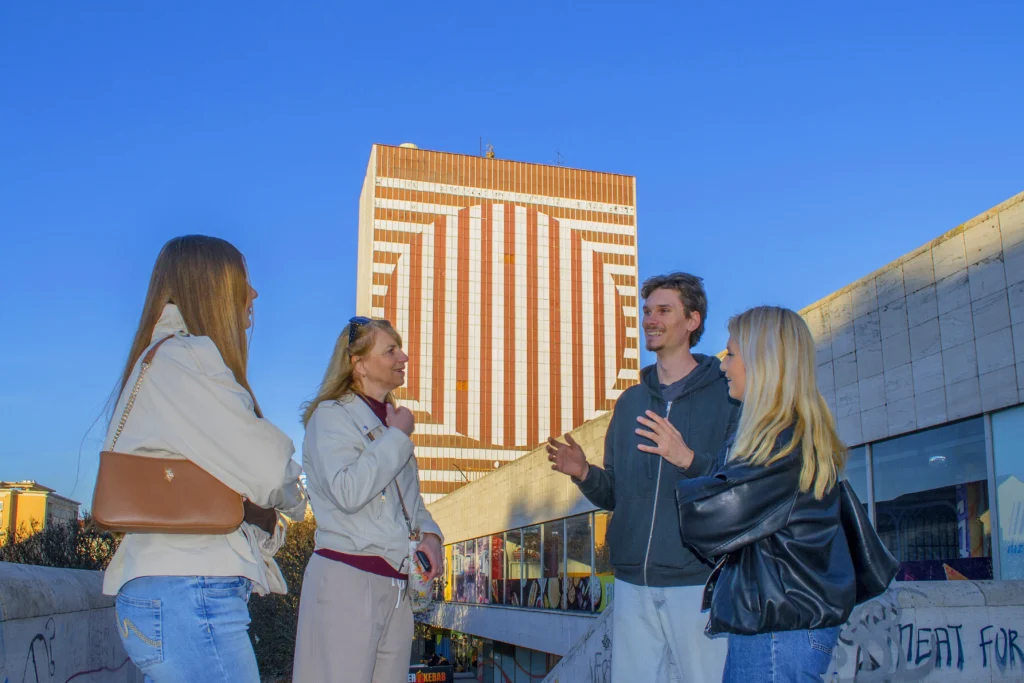
Planning Your Visit: Practical Tips
To truly appreciate the city, we recommend a stay of at least 3 to 4 days.
While Bratislava is exceptionally easy to access by train or bus from Vienna, Prague, or Budapest, it deserves to be more than a footnote in your itinerary. Prices are generally more affordable than in neighboring capitals, making it an excellent base for exploring the wider region of Western Slovakia.
For the ultimate local experience, don’t miss our Traditional Food & City Tour, where we combine the city’s iconic sights with the rich flavors of our heritage. Let us handle the logistics while you enjoy the perfect blend of history, culture, and authentic cuisine.
Discover Bratislava on a Tour
Are you ready to see the side of the city that the guidebooks often overlook? For examplen, our Traditional Food & City Tour is designed to take you deeper. Instead of just pointing at monuments, we share the human stories—the legends of the coronation kings, the velvet revolution, and the local stories that have been passed down through generations.
Join our food & walking tours to uncover Bratislava’s secrets while it’s still Europe’s best-kept hidden gem, free from the crowds. We’ll take you to the hidden gems, the best local restaurants, and the bakeries that serve the famous Bratislava rolls.